1991 – 2019
Combustion Legacy
28 cars. 28 years. Three continents. The complete history of RIT Racing's combustion era — from F0 to F27.
28
Combustion Cars Built
1991
First Car (F0)
2019
Last Car (F27)
3
Continents Competed
1st
FSUK 1999, Australia 2001
2018 – 2019
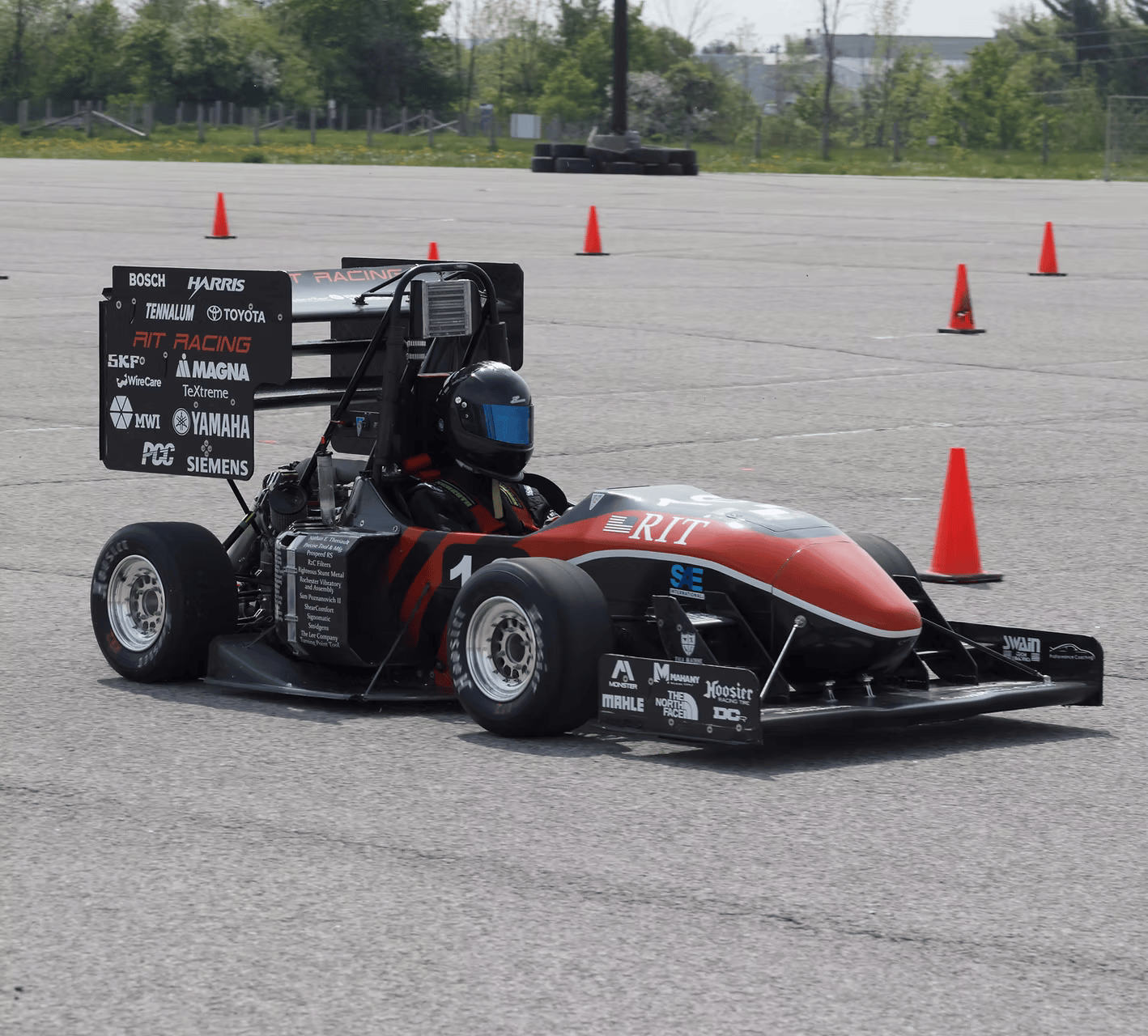
F27
The End of an Era
F27 marked the final year RIT Racing would build a new combustion car. Despite struggles in dynamic events at Michigan, F27 finished 3rd in Design — the highest design placement in over five years. A fitting close to the combustion chapter.
3rd in Design — FSAE Michigan 2019
2017 – 2018
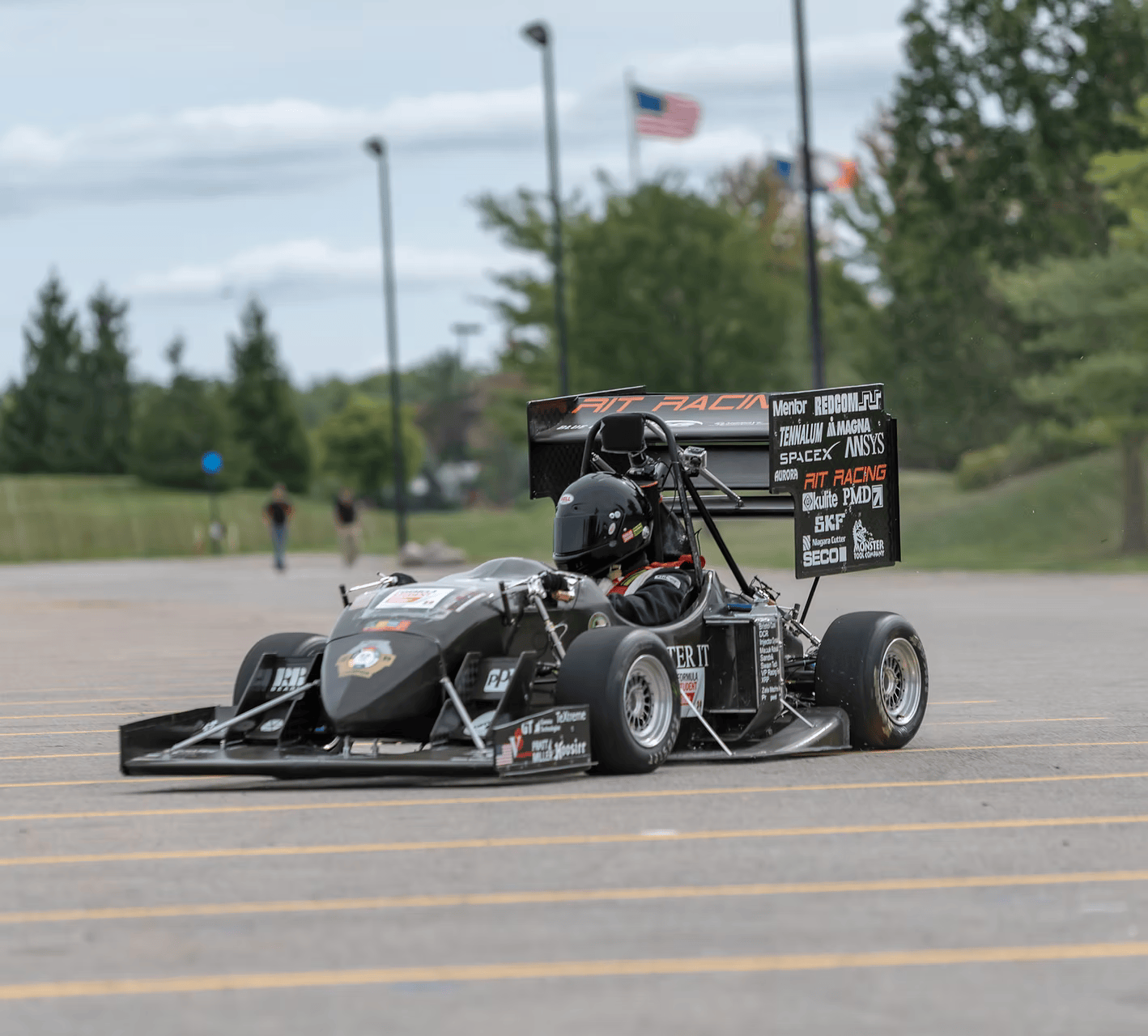
F26
More details about this vehicle coming soon.
2016 – 2017
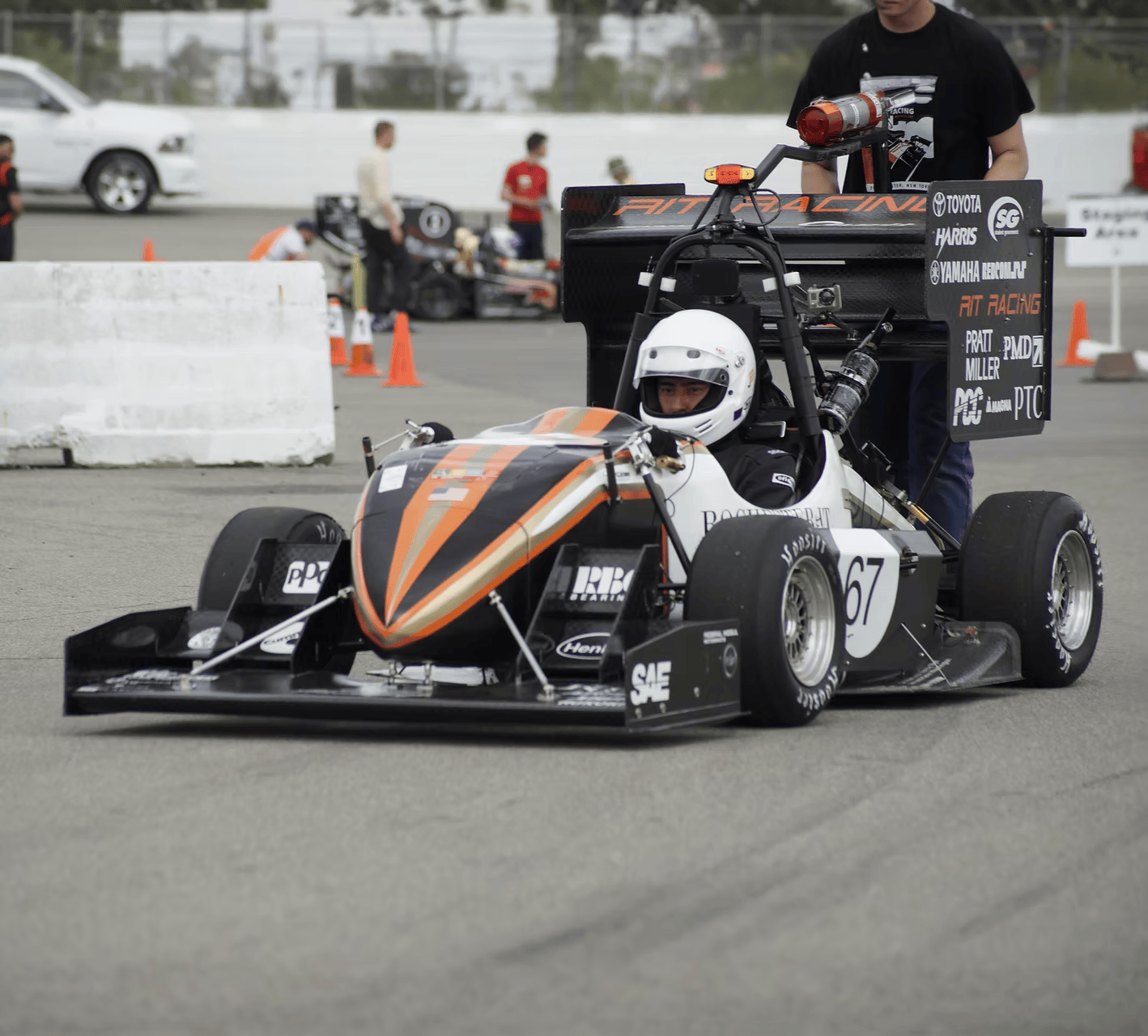
F25
25 Years of RIT Racing
A milestone anniversary car built to celebrate 25 years of the Formula SAE program at RIT.
2015 – 2016
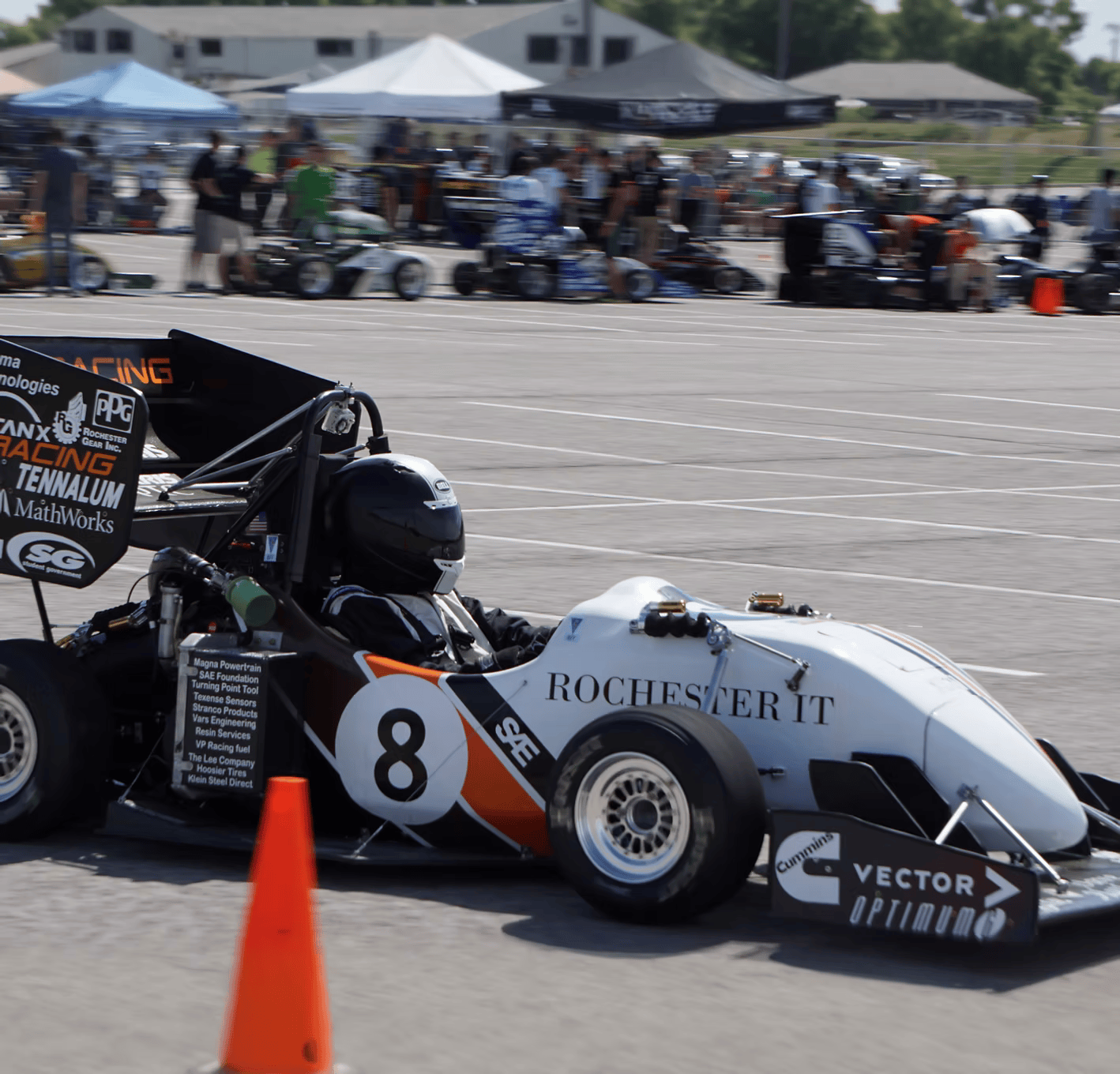
F24
New Generation
More details about this vehicle coming soon.
2014 – 2015
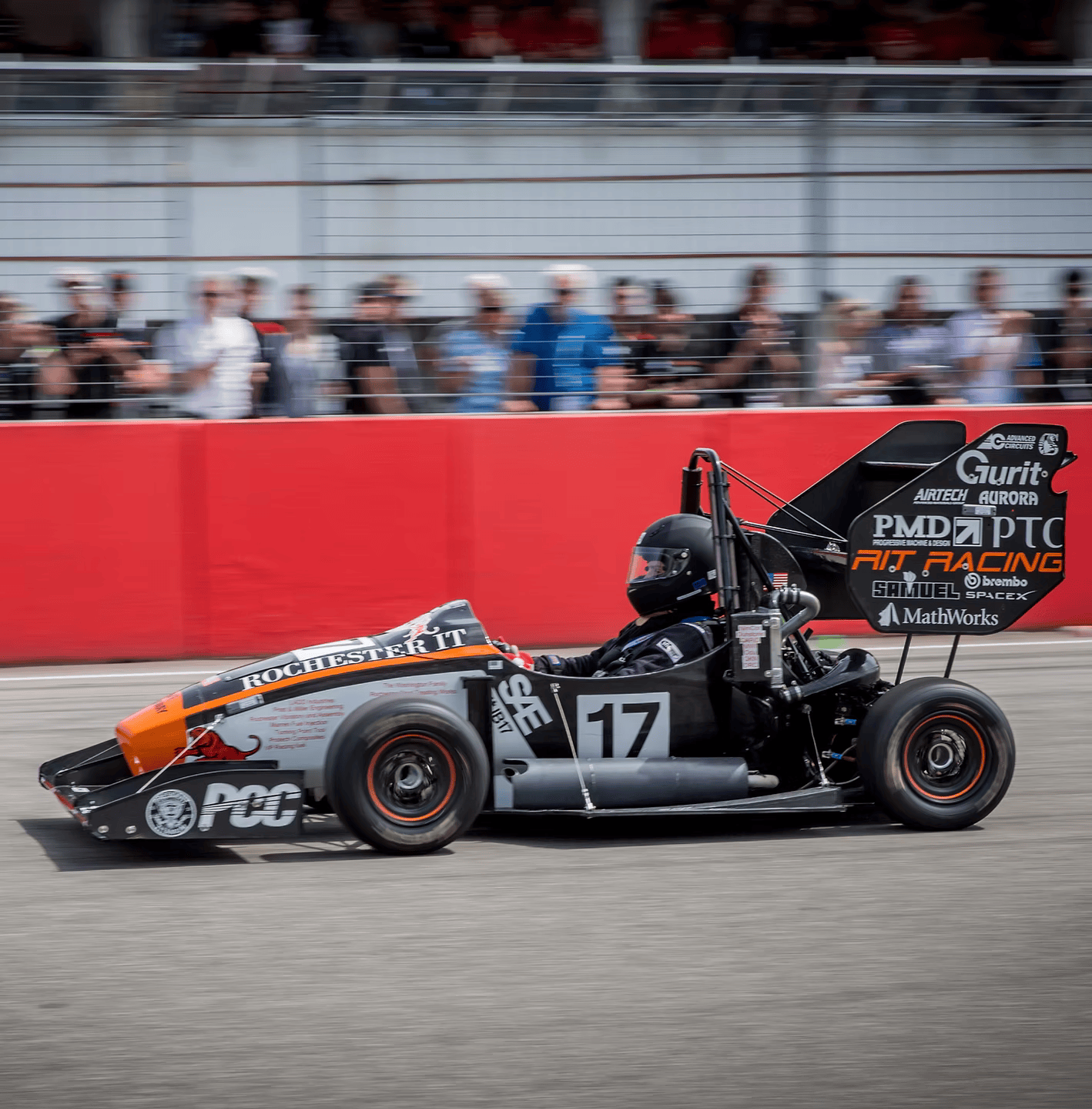
F23
New Aero Rules
F23 was the first RIT Racing car built to the new spec aerodynamic rules for 2015. This car competed at both FSAE Michigan and Formula Student Germany.
FSAE Michigan + Formula Student Germany
2013 – 2014
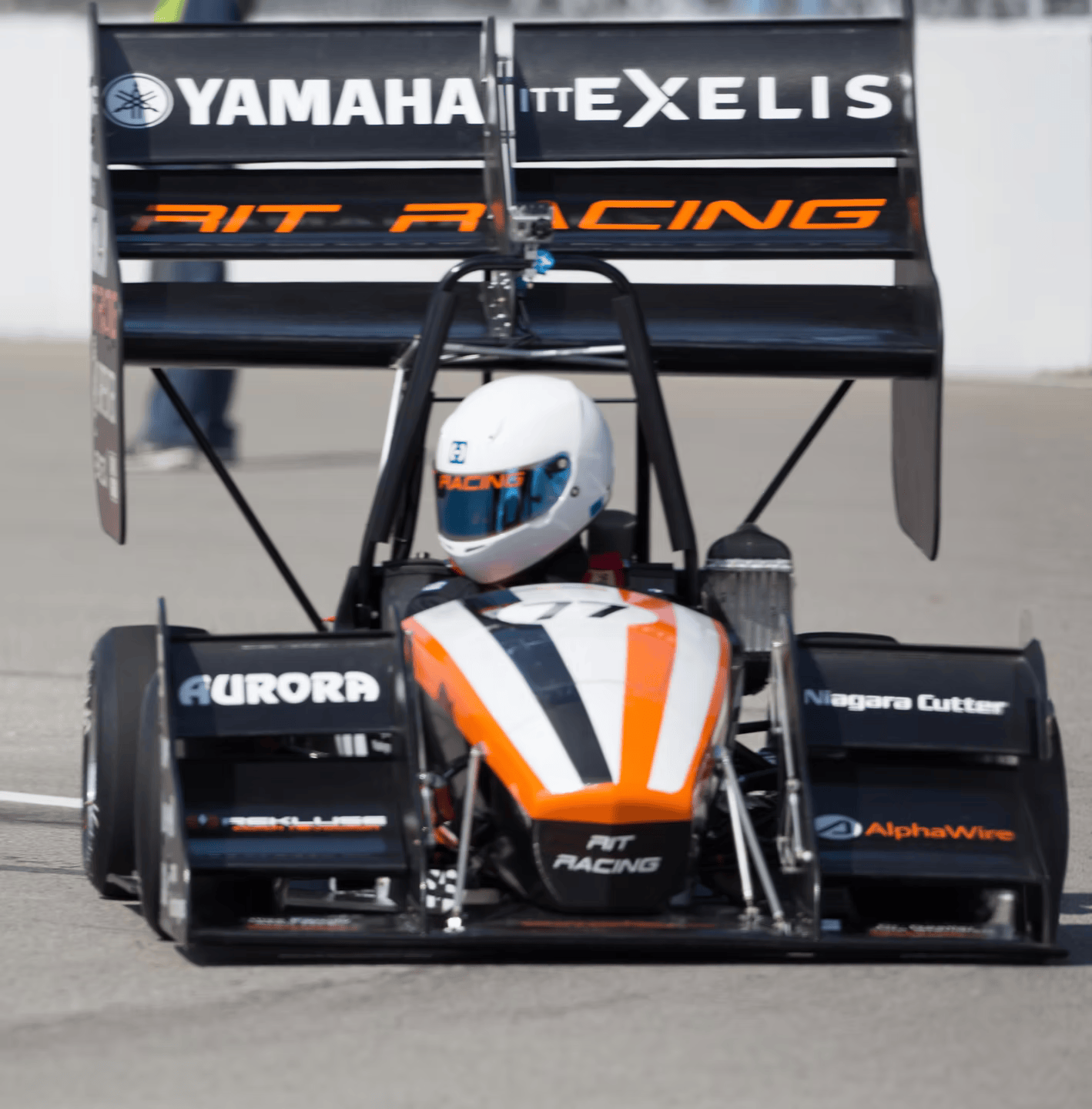
F22
More details about this vehicle coming soon.
2012 – 2013
F21
More details about this vehicle coming soon.
2011 – 2012
F20
Biggest Leap in Team History
F20 represented the biggest single-year change in RIT's history — swapping from a 4-cylinder engine to a single cylinder, moving from a half monocoque to a full carbon monocoque, adding a full aero package, and going to 10-inch tires. F20 weighed just 328 lbs — a 130 lb savings over F19.
Strong result at Formula Student Germany
2010 – 2011
F19
More details about this vehicle coming soon.
2009 – 2010
F18
Another Win in California
F18 continued the winning tradition at FSAE California, building on the success of F17.
1st Overall — FSAE California
2008 – 2009
F17
Back on Top
F17 put RIT back on top for the first time since 2001 — one of the most successful cars in team history. 1st Overall in California, 2nd Overall at FSAE Michigan, and 6th in Skidpad at Formula Student Germany.
1st California · 2nd Michigan · 6th Skidpad FSG
2007 – 2008
F16
More details about this vehicle coming soon.
2006 – 2007
F15
More details about this vehicle coming soon.
2005 – 2006
F14
More details about this vehicle coming soon.
2004 – 2005
F13
More details about this vehicle coming soon.
2003 – 2004
F12
More details about this vehicle coming soon.
2002 – 2003
F11
More details about this vehicle coming soon.
2001 – 2002
F10
10th Anniversary Car
A special livery to celebrate the 10th anniversary — and the first car to sport the orange and black we love today. Some misfortune in Detroit was redeemed at FSUK, taking the bronze medal overall with 3rd in Endurance and 2nd in both Design and Presentation.
3rd Overall FSUK · 3rd Endurance · 2nd Design
2000 – 2001
F9
Australian Champions
RIT's 2001 FSAE car was praised for its excellent integration. FSUK saw RIT earn 2nd in Presentation, Acceleration, and Endurance, 3rd in Autocross, and 4th Overall. In Australia, we climbed to 1st Overall.
1st Overall Australia · 4th Overall FSUK
1999 – 2000
F8
Three Continents
Y2K didn't slow RIT down at all — competing on 3 different continents. An unfortunate DNF in endurance brought a 14th overall in Detroit, but 1st in Design and Presentation, 3rd in Acceleration. 1st in Accel and 1st in Design in England with 6th Overall, and 2nd Overall at FSAE Australasia.
1st Design/Accel Detroit · 2nd Overall Australia
1998 – 1999
F7
FSUK Inaugural Champions
1999 was a landmark year — the first time RIT competed overseas. The first car to use 10-inch rims to reduce weight. F7 competed at the inaugural FSUK event and won 1st in Design, 1st in Acceleration, and 1st Overall. Also earned 1st in Presentation, 2nd in Design, and 2nd Overall in Detroit.
1st Overall FSUK · 2nd Overall Detroit
1997 – 1998
F6
More details about this vehicle coming soon.
1996 – 1997
F5
New Chassis Each Year
With new regulations prohibiting second-year cars for the 1997 FSAE competition, F5 was the first car to start the trend of a new chassis design every single year. F5 continued to impress in Detroit, taking the last step on the podium.
3rd Overall — FSAE Detroit
1995 – 1996
F4
One of the Fastest in the World
Sharing a chassis with F3, F4 was one of the fastest FSAE cars in the world in 1996. Secured 1st in Acceleration, 1st in Autocross, and 2nd Overall at Detroit — RIT was becoming a well-known name in FSAE.
1st Acceleration · 1st Autocross · 2nd Overall Detroit
1994 – 1995
F3
Second Chassis Design
RIT's second chassis design. Efforts were made to reduce overall weight using thinner-wall tubing in the frame. Though the car was lighter, the team discovered trade-offs in chassis durability. Along with a sleek new color scheme, F3 earned another runner-up trophy in Detroit.
2nd Overall — FSAE Detroit
1993 – 1994
F2
Last Original Chassis
The last car based on the original F0 chassis. Further improving the team's knowledge of fundamental race car design proved to be helpful, securing 2nd place overall in Detroit.
2nd Overall — FSAE Detroit
1992 – 1993
F1
Rookie of the Year
The 'F1' name marked the team's first officially labeled car — largely an iterative update of the F0 platform. F1 performed well capturing 8th place in Detroit and was awarded Rookie of the Year.
8th Overall · Rookie of the Year — Detroit
1991 – 1992
F0
Where It All Began
RIT's very first Formula SAE car. The team built a steel space-frame chassis powered by a 600cc Honda CBR600F engine. This was RIT's prototype vehicle — proof that RIT students could build a Formula SAE car from scratch. The F0 chassis was shared with F1 and F2.
RIT Racing's First Car
The Electric Era Continues
From F0 to F33 — the pursuit of excellence never stops.
See Our Electric Cars